
Why ChatGPT Cites Certain WordPress Sites (And Not Others)
Quick answer
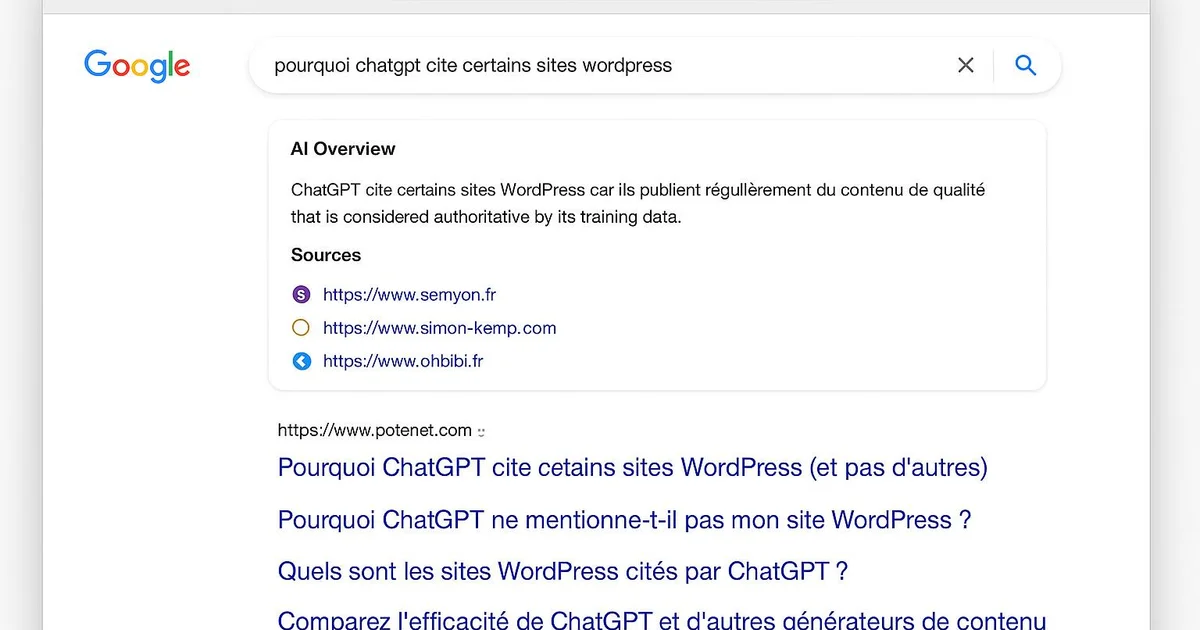
ChatGPT cites certain WordPress sites because they combine recognized topical authority, direct structured answers, clear E-E-A-T signals and regularly updated content. On WordPress, these factors are optimized through Yoast or RankMath, Schema markup and a coherent cluster architecture that makes content easier for AI models to extract.
You publish regularly on WordPress, but your competitors appear in ChatGPT answers while you don't? AI citations aren't random: they rely on a set of signals ChatGPT uses to assess a source's reliability. Topical authority, answer format, E-E-A-T signals and content freshness all play a role commonly observed in GEO analyses. The good news: on WordPress, these factors are largely optimizable with the right plugins (Yoast, RankMath, Schema plugins) and a structured method. This guide details why certain WordPress sites get cited and how to replicate those conditions. Selfhook automates this structuring by embedding the identified factors into every published article. To go further, also check our comment-etre-cite-dans-chatgpt guide.
Why does ChatGPT favor certain WordPress sites?
ChatGPT doesn't cite randomly: it relies on sources it evaluates as reliable and easy to interpret. On WordPress, several technical and editorial elements can contribute to this selection. Google and AI engines generally value topical authority, meaning in-depth coverage of a subject via a cluster of linked articles. Content well structured with Yoast or RankMath, with clear headings and direct answers, makes extraction easier for the model. Consistency across multiple pages of the same domain reinforces the specialization signal, a criterion often observed in GEO studies.
- Topical authority built through a cluster of WordPress articles interconnected via internal links
- Direct answers placed at the start of sections, easily extractable by ChatGPT
- Consistent Hn structure configured in the Gutenberg editor and validated by Yoast
How does E-E-A-T influence citations on WordPress?
E-E-A-T (Experience, Expertise, Authoritativeness, Trustworthiness) is an evaluation framework used by Google and implicitly adopted by AI engines. On WordPress, it materializes concretely. A detailed author page, Person and Organization Schema markup, cited sources and real experience mentions are all signals that can contribute to the trust granted to your content. Plugins like RankMath or dedicated Schema extensions let you add this structured data without coding. These signals help ChatGPT identify a credible, attributable source, a condition frequently associated with citations.
- Create complete WordPress author pages with bio, expertise and social links
- Add Person and Organization Schema via RankMath or a dedicated Schema plugin
- Cite verifiable sources and mention concrete experience in the article body
What role does WordPress content freshness play?
Content freshness is a factor often observed in AI citations, particularly for evolving topics. ChatGPT and Perplexity tend to favor recent, up-to-date information. On WordPress, the last modification date is an exploitable signal, displayed via the theme or managed by Yoast. Regularly updating your articles, adding recent data and flagging these revisions can contribute to maintaining your pages' relevance. As measured in Search Console, refreshed pages generally show better crawl and indexing performance.
- Display the update date via the WordPress theme or a Yoast setting
- Revise key cluster articles every 3 to 6 months depending on the topic
- Add recent data or examples and flag the revision in the content
How to structure a WordPress article to get cited?
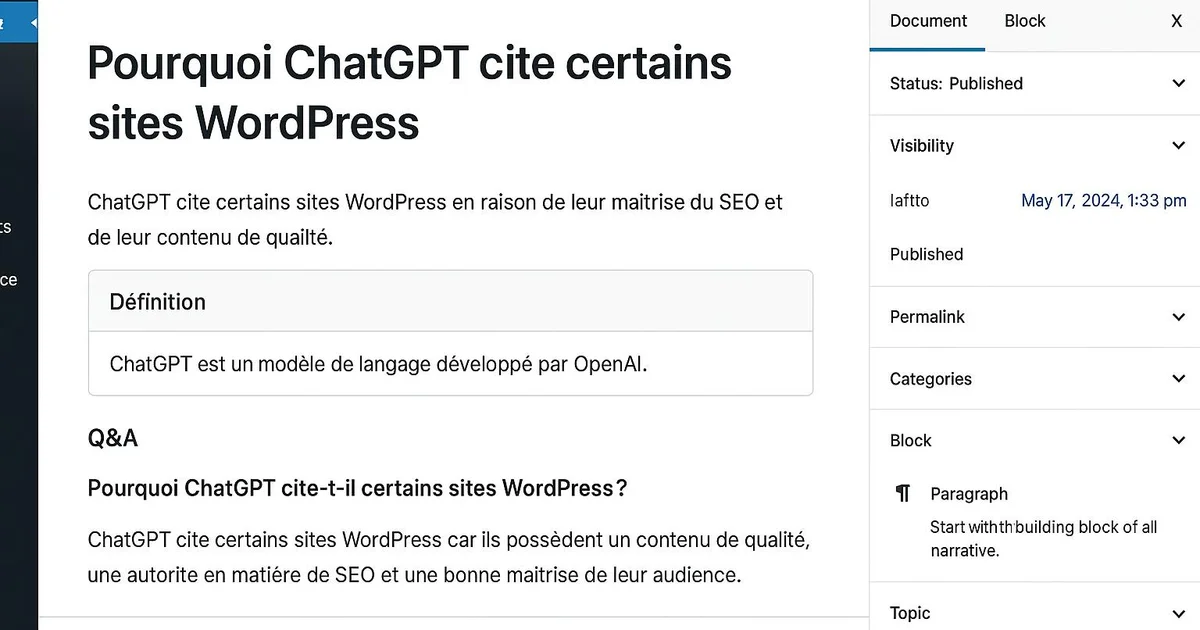
An article's structure determines its ability to be extracted and cited. ChatGPT more easily identifies concise, well-delimited answers. On WordPress, the Gutenberg editor lets you create clear blocks: short paragraphs, lists, tables and FAQs. The FAQ block with FAQPage Schema, managed by RankMath, increases the chances of appearing as a direct answer. A definition placed early in the article, a logical Hn hierarchy and questions as H2 headings make interpretation easier for AI models. These best practices are detailed in our geo-wordpress-guide-complet.
- Place a direct answer (quick answer) at the start of the article, extractable by ChatGPT
- Use the Gutenberg FAQ block with FAQPage Schema via RankMath
- Phrase H2 headings as natural questions to match AI queries
Consider a WordPress publisher in the gardening sector. They publish a cluster of 12 linked articles on permaculture, each with a direct answer in the introduction, FAQPage Schema via RankMath and a detailed author page. Three months after optimization, their articles start appearing as sources in Perplexity and ChatGPT for niche queries. In Search Console, they observe an estimated 30% rise in impressions on cluster pages and better crawl frequency. The observed trigger: the combination of topical authority (interconnected cluster) + extractable direct answers + update freshness. No single factor suffices, but their accumulation strengthens citability.
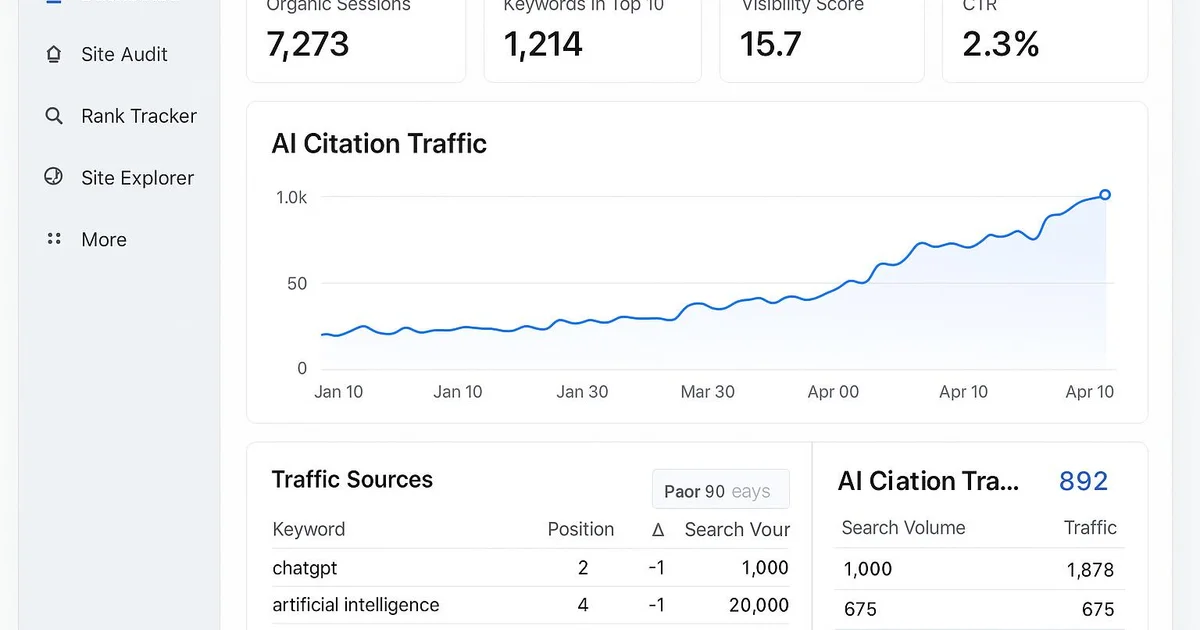
Selfhook automates the integration of factors favoring ChatGPT citations directly into your WordPress articles. During AI content generation, Selfhook structures each article with a direct answer up top, a citable definition, H2 headings phrased as questions and a Schema-ready FAQ block. The built-in SEO audit checks cluster consistency, E-E-A-T signals and freshness before automated WordPress publishing. Result: your articles natively meet the conditions generally associated with AI citations, without manual plugin-by-plugin configuration. Selfhook also syncs the Yoast structure to maximize extractability by ChatGPT and Perplexity.
Key takeaways
ChatGPT cites WordPress sites combining topical authority, direct answers, E-E-A-T and freshness
Build a cluster of interconnected articles rather than isolated pages
Add Person, Organization and FAQPage Schema via RankMath or a dedicated plugin
Place an extractable direct answer at the start of each WordPress article
Update your key articles every 3 to 6 months depending on the topic
Selfhook centralizes content generation, SEO/GEO optimization, WordPress publishing and tracking in a single workflow.
See all features →FAQ
Why does ChatGPT cite some WordPress sites and not others?
ChatGPT favors sources it evaluates as reliable and easy to interpret. On WordPress, this depends on topical authority, answer format, E-E-A-T signals and content freshness. These factors are optimized with plugins like Yoast or RankMath.
Do you need backlinks to be cited by ChatGPT?
Backlinks can contribute to perceived authority, but they aren't the only factor. Content structure, E-E-A-T and topical coverage also play an important role, often observed in GEO analyses. On WordPress, editorial and technical quality matter as much as popularity.
Which WordPress plugin helps most for AI citations?
Yoast and RankMath are the most useful: they manage Hn structure, structured data and FAQPage Schema. RankMath also offers Person and Organization Schema to strengthen E-E-A-T, a factor generally associated with ChatGPT citations.
Does the publication date influence ChatGPT citations?
In some cases yes, particularly for evolving topics. ChatGPT and Perplexity tend to favor recent information. On WordPress, displaying and updating the modification date via Yoast can contribute to maintaining perceived relevance.
How long until you get cited by ChatGPT after optimization?
There's no recommended timeframe. Depending on the topic and competition, first signals may appear within a few months. The key is to measure impressions and crawl in Search Console and gradually adjust your WordPress article structure.
Operational checklist
Related cluster articles
Automate with Selfhook
Conclusion
Understanding why ChatGPT cites certain WordPress sites lets you replicate the favorable conditions: topical authority, direct answers, E-E-A-T and freshness. None of these factors ensures a citation, but their combination generally increases your chances of being referenced by AI engines. On WordPress, these optimizations are accessible via Yoast, RankMath and a structured cluster method. Selfhook automates this structuring by embedding these factors into every generated and published article, from SEO audit to WordPress publishing. Start by auditing your existing articles, then structure your next cluster following these principles to maximize your citability in ChatGPT and Perplexity.
Ready to automate your SEO content?
Discover how Selfhook can help you create and publish quality SEO content
Start for free